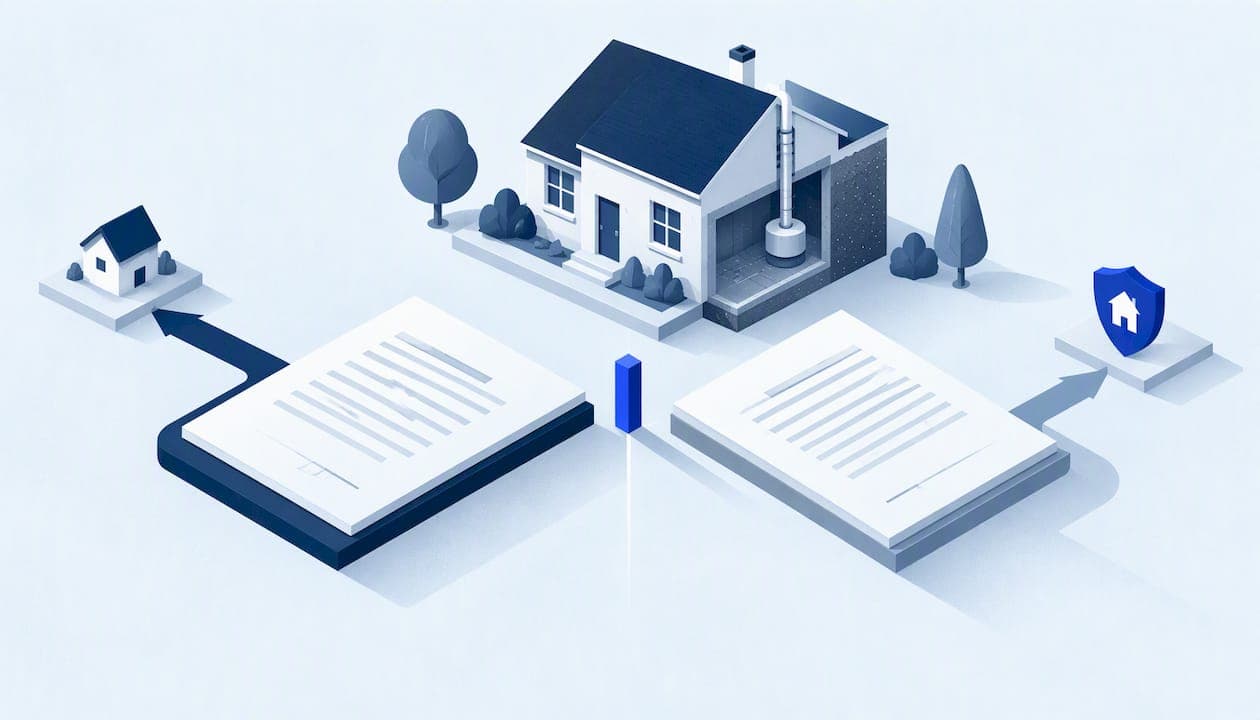
A radon contingency gives a buyer the right to test during the inspection period and act on the result. The EPA recommends action at 4 pCi/L, and mitigation systems commonly bring levels down. A deal may end with the seller installing mitigation, offering a closing credit, or the buyer walking away or waiving the issue.
TL;DR:
- A contingency should specify the lowest regularly used level, tester and payer, closed house conditions, written report, deadlines, contractor choice, and remedies for failed verification.
- Book testing early in the inspection period, maintain closed house conditions, use an independent or certified tester, and reserve time for retesting near 4 pCi/L.
- Between 2 and 4 pCi/L, buyers may seek mitigation or disclosure; readings near 4 warrant confirmation because short term tests have a margin of error.
- Seller installation provides documented repairs; a credit shifts contractor choice and uncertainty to the buyer, while waiving leaves future mitigation costs with the buyer.
- State disclosure rules vary, so sellers should check their state requirements and disclose known results, while retaining mitigation and verification records for the buyer.
Table of Contents
- What does a radon contingency clause cover?
- How do real-estate radon tests differ from consumer kits?
- What do the results mean for negotiations?
- Should the seller install, give a credit, or should the buyer waive?
- What do mitigation costs and timelines look like?
- How do you draft an effective radon contingency clause?
- What happens after mitigation is installed?
- What must sellers disclose, and how does it vary by state?
- My take: test early, fix it on paper
- How we help with testing, mitigation and verification for your sale
- FAQ
- Sources
What does a radon contingency clause cover?
A well-written clause turns a vague worry into a checklist both sides can follow. It names who does what, by when, and with which paperwork.
- Test type and location: the lowest level of the home that could be used regularly, not just the main floor.
- Who orders and pays: usually the buyer, though contracts vary.
- Conditions: closed-house conditions and a lab or device report in writing.
- Deadlines: a hard date for the test result and a hard date for any response.
- Remediation terms: who picks the contractor and how a repair or credit amount is set.
Precise dates and named documents (the lab report, the installation invoice, the verification test) prevent most disputes. When a clause says only "radon must be acceptable," each side fills in the blanks differently.
How do real-estate radon tests differ from consumer kits?
Transaction testing runs on tight deadlines and has to resist tampering. The EPA's Home Buyer's and Seller's Guide to Radon says to test the lowest level that could be used regularly and accepts short-term tests for transactions, with steps to prevent interference. Professionals may use continuous radon monitors to track readings, which can help spot possible tampering.
- Book the test early in the inspection period so a retest still fits.
- Confirm closed-house conditions begin before the test starts and continue throughout.
- Use an independent or certified tester so both sides trust the number.
- Ask when the report will arrive, then plan a retest slot if the result is borderline.
Pro Tip: Duration matters for confidence. Our guide on radon test duration explains why 48 hours may not provide enough information in some situations.
If you need transaction-ready results, our radon testing service is built for that timeline.
What do the results mean for negotiations?
The EPA draws two lines, and your negotiating position follows them. Anything under 2 pCi/L is usually a minor point. Between 2 and 4, many buyers ask for mitigation or at least full disclosure. At 4 or above, mitigation is generally expected or negotiated.

The EPA suggests homeowners consider fixing a home when results fall between 2 and 4 pCi/L, and recommends action at 4 pCi/L or higher. That gives both parties a neutral benchmark instead of a gut feeling.
Short-term readings near 4 pCi/L carry a margin of error, so a confirming test is reasonable before anyone spends money. Our walkthrough on confirming a 4 pCi/L result covers that step.
Should the seller install, give a credit, or should the buyer waive?
Each outcome shifts control, cost and confidence differently.
- Seller installs before closing: the seller picks the contractor and controls cost, and the buyer gets documented results. Homes with radon problems that have been fixed have still sold, and documented mitigation can be a selling point.
- Seller credit: faster, but the buyer inherits the uncertainty and may ask for a padded figure. Watch lender limits on seller concessions.
- Buyer waives: sometimes chosen in a strong seller's market or by a buyer who accepts the risk. It is the weakest choice for long-term peace of mind.
Whichever route you take, get written contractor quotes, keep to contingency deadlines and reserve a retest slot. For a plain-English look at how deadlines interact, this guide to home sale contingencies explains the contract mechanics.
What do mitigation costs and timelines look like?
Price depends on the home, so quotes beat averages. Our Cincinnati mitigation price guide shows how local factors play out.
- Cost drivers: foundation type, crawl space work and system complexity.
- Timeline: installation timing varies, followed by time for verification testing and paperwork.
- Who pays: the seller directly, a closing credit, or a repair escrow.
- Financing: HUD programs such as the FHA 203(k) can finance repairs, including radon mitigation when eligible, as noted in EPA's real estate resources.
Build the verification test and report turnaround into your closing calendar, not after it.
How do you draft an effective radon contingency clause?
Think of the clause as a short project plan. Buyers' agents and sellers' attorneys can use this checklist, which is a starting point and not legal text.
- State the test method and the exact acceptable level.
- Say who orders the test and who pays.
- Set a clear inspection-period deadline for the test.
- Set a clear remediation deadline after quotes are accepted.
- Name who chooses the contractor.
- List required documents: lab report, contractor invoice and post-mitigation test.
- Define the buyer's remedy: credit, repair or cancellation.
- Add fallback language for a failed verification or a scheduling delay.
Pro Tip: Write the fallback first. Most radon disputes come from silence about what happens when something slips.
What happens after mitigation is installed?
Verification proves the system works. The EPA guidance calls for an independent, qualified professional to test with the system running.
- Collect the paperwork: installation report, contractor invoice and the verification lab report.
- Add it to the disclosure package so the buyer can remove the contingency with confidence.
- If the result is borderline: schedule a longer-term test and document each step taken to reach a clear answer.
Handing the buyer a clean, dated packet at closing often ends the conversation.
What must sellers disclose, and how does it vary by state?
Radon disclosure requirements can vary by state, so check the rules that apply to your sale. Some states require specific forms, while others rely on general material-defect rules, so the safest move is to check your state radon office.
- Known results: concealing them can create legal exposure.
- Documented mitigation: removes much of the buyer's uncertainty and often the reason to negotiate at all.
- State rules: your state radon office can point you to the right forms.
A qualified real estate attorney can confirm what applies to your sale.
My take: test early, fix it on paper
In my experience, the transactions that go smoothly start with a test before the first offer, not after. I would rather see a seller hand over a documented fix than argue over a credit. Following EPA guidance and using certified installers shortens negotiations and removes most of the guesswork for everyone involved.
— Yoshua
How we help with testing, mitigation and verification for your sale
We are Cincinnati Radon Solutions, and we specialize in radon testing and mitigation. For a home sale, we handle transaction testing, custom mitigation systems with post-install verification, and written quotes. We provide documentation suited to real estate transactions. Hiring a local team can help keep your schedule on track. See our services and request a quote.

This article is general information, not a substitute for advice from a qualified doctor. Consult a qualified healthcare professional about your own circumstances before acting on anything here.
FAQ
Is radon exposure overblown?
No. Radon levels are worth checking, and the EPA sets a 4 pCi/L action level. Testing is simple and fixes are well established.
Why include a radon contingency in an offer?
It gives the buyer a defined way to act on test results before closing. Without one, a high reading after closing becomes the buyer's cost alone.
Can you sell a home with high radon levels?
Yes. The EPA notes that fixed homes have still sold, and documented mitigation can help the sale. Check your state's disclosure rules first.
Which states have the highest radon risk?
Risk varies by area, even within a state. Contact your state radon office for local data, and test regardless, since neighboring homes can differ.