
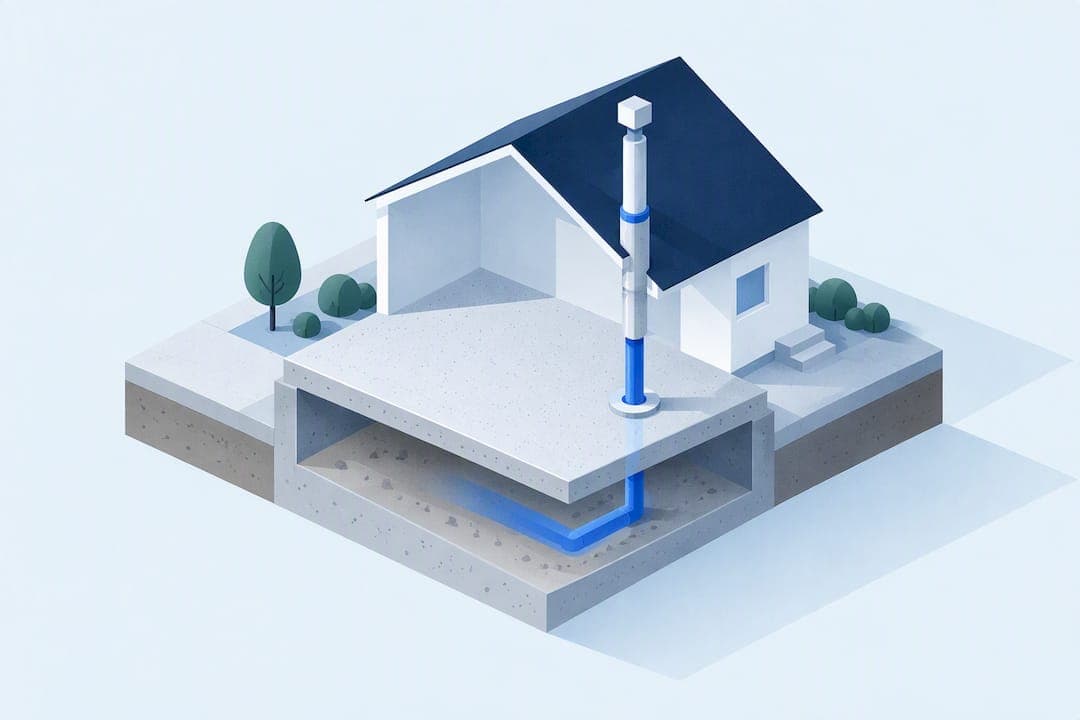
Sub-slab depressurization (SSD) is the standard active fix for soil gas problems under basements and slab-on-grade homes, including radon. A properly designed system, paired with a post-installation verification test, typically drives indoor radon down dramatically according to EPA technical guidance. The fan runs continuously, and the right design depends heavily on your foundation type and soil.
TL;DR:
- Crawl spaces need a sealed membrane system, while a continuous drain tile loop and properly sealed sump can support a system that draws from the sump.
- Dense clay, shallow groundwater, fractured bedrock, and divided fill can limit suction spread, so contractors should measure pressure field extension before choosing suction points.
- Seal slab cracks, utility openings, and sump lids to prevent suction loss, and require a fixed written quote that includes verification testing after installation.
- The fan runs continuously and needs periodic radon retesting, especially every couple of years or after foundation work; a zero manometer reading warrants service.
Table of Contents
- How sub-slab depressurization actually works
- System components and which variant fits your foundation
- When SSD is appropriate for your home
- What a proper design and installation checklist covers
- Diagnostics and verification testing before and after install
- Operation, maintenance, and what to expect long term
- What installers often get wrong about sub-slab systems
- Getting a system designed and verified for your home
- FAQ
- Sources
How sub-slab depressurization actually works
SSD relies on a simple physical idea: soil gas, including radon, moves toward your home because the pressure under the slab is usually slightly higher than the pressure indoors. A fan reverses that relationship by pulling air from beneath the slab and venting it outside, creating a negative pressure field that intercepts gas before it enters living space.
How far that pressure field reaches determines whether one suction point is enough or whether you need several. Installers measure this directly rather than guessing.
- Advective flow: soil gas moves along pressure gradients, not just diffusion, so reversing the gradient under the slab is what stops entry.
- Pressure field extension (PFE): the measured radius of influence from a suction point, which dictates suction-point count and placement.
- Sealing: cracks, sump lids, and utility penetrations need to be closed, or the fan wastes suction pulling conditioned air instead of soil gas, a point EPA guidance treats as a core design requirement.
System components and which variant fits your foundation
Most SSD systems share the same basic parts: a suction point or pit cut into the slab, rigid PVC pipe running to an inline fan, and an exhaust stack that discharges above the roofline. The differences show up in how the suction point is created and where it draws from.
- Classic SSD: a suction pit under solid slab, the most common setup for basements and slab-on-grade homes.
- Sump or drain-tile depressurization: the fan draws from an existing drain-tile loop through a sealed sump lid, which the Minnesota Department of Health notes can work efficiently when the loop is continuous and the sump is properly sealed.
- Sub-membrane depressurization: used in crawl spaces, where a plastic membrane covers exposed soil and a suction point pulls air from beneath it.
Fans are typically mounted outside, in an attic, or in a garage, and exhaust piping has to clear the roofline or stay well away from windows and air intakes to prevent soil gas from re-entering the house.
When SSD is appropriate for your home
SSD works well under basements and slab-on-grade foundations where the slab is reasonably intact and accessible from below. Crawl spaces usually need the sub-membrane variant instead, since there's no continuous slab to depressurize directly.
Soil matters as much as foundation type. Permeable soils like sand let suction spread widely from a single point, while dense clay restricts that spread and often calls for multiple suction points or larger suction pits to achieve adequate pressure field extension, a consideration detailed in ANSI/AARST mitigation standards. Shallow groundwater, fractured bedrock, or heavily sub-divided sub-slab fill can all reduce how far a single suction point reaches, which is why site-specific testing, not a generic formula, drives the final design.

What a proper design and installation checklist covers
A sound SSD proposal isn't a one-size layout. It reflects measurements taken at your specific house, and a few line items separate a careful job from a rushed one.
- Suction point count and siting: determined by suction field extension testing and by where slab access is practical, not by a flat per-square-foot rule.
- Fan selection: high-suction, low-flow fans suit dense soils or long pipe runs, while standard inline fans handle more typical permeable soil conditions; either way, the fan is rated for continuous duty.
- Pipe diameter and routing: sized to the fan's airflow needs and routed to minimize bends, with exhaust terminating well above grade and away from windows or soffit vents to avoid re-entry, consistent with placement rules described by the Minnesota Department of Health.
- Sealing priorities: sump lids, slab cracks, and utility penetrations get sealed first, since unsealed openings bleed suction away from the intended pressure field; proper sump sealing is critical according to basement waterproofing best practices.
- Scope of work: a fixed written quote, a list of required seals, included verification testing, system labeling, and a visible pressure gauge or fan-failure alarm should all appear in the contract before work starts.
Pro Tip: Ask any contractor to show you the suction field extension readings for your specific slab before signing, not just a generic system diagram.
Low-permeability sub-slab material often needs a larger cleared void space beneath the suction point, sometimes well beyond the bare minimum, a detail covered in AARST mitigation standard guidance. Skipping that step is a common reason systems underperform.
Diagnostics and verification testing before and after install
Good design starts with a walk-through: identifying cracks, open sumps, French drains, and other preferential pathways soil gas might already be using to enter the house. From there, diagnostic testing confirms what the design actually needs to accomplish.
- Suction field extension tests: a temporary fan and manometer readings at test holes show how far suction reaches, both qualitatively (smoke pencil) and quantitatively (pressure differential).
- Blower door and tracer tests: used in more complex cases to understand air exchange and pathway connections between sub-slab and indoor air, approaches outlined in EPA technical guidance.
- Pre- and post-install radon measurements: a baseline test establishes starting levels, and a verification test after activation confirms the system is working.
Documented, measured verification matters beyond peace of mind. It's often required for real estate transactions and gives you a paper trail if indoor levels ever creep back up.
Operation, maintenance, and what to expect long term
SSD fans run continuously, year-round, drawing modest household power comparable to a small appliance. Fan lifespan commonly runs several years before replacement becomes necessary.
A simple U-tube manometer mounted on the pipe shows at a glance whether the fan is still pulling suction, and some systems add pressure gauges or audible alarms for fan failure. Periodic follow-up radon testing, especially every couple of years or after any foundation work, confirms the system is still performing. A manometer reading at zero, a silent fan, or rising radon numbers are the clearest signs it's time to call for a repair or fan replacement.

What installers often get wrong about sub-slab systems
The biggest gap in this field isn't the physics, it's discipline. Plenty of installers size a fan off a square-footage chart and skip the suction field extension test that tells you whether one point will actually cover the slab. ANSI/AARST practice exists precisely because soil, slab, and foundation conditions vary too much for guesswork to hold up.
If you're hiring someone, ask four questions: what diagnostics will you run before designing anything, is the quote fixed in writing, is verification testing included rather than upsold separately, and are you ANSI/AARST certified. A contractor who hesitates on any of those is telling you something.
— Yoshua
Getting a system designed and verified for your home

When a sub-slab problem shows up in your home, the fix works best when it's measured, not templated. Our process starts with on-site diagnostics, including suction field extension testing, so the system we design matches your actual slab and soil conditions rather than a generic layout. Every job closes with post-installation verification testing so you have documented proof the system works, useful for your own records or for a real estate closing. We also handle repairs and fan replacement on existing systems that are underperforming. If you want a fixed written quote built around your specific foundation, our radon mitigation services page is the place to start.
FAQ
How much does sub-slab depressurization cost?
Cost depends on foundation type, soil conditions, and how many suction points your home needs, so pricing is best quoted after a site visit rather than estimated generically. Our cost guide breaks down the factors that typically drive price up or down.
How do you install a sub-slab depressurization system?
Installation starts with diagnostics, including a visual survey and suction field extension testing, to determine suction point count and placement. From there, a contractor cuts the suction pit, runs sealed PVC piping to an exterior-mounted fan, and vents exhaust above the roofline, followed by verification testing to confirm performance.
What is an active sub-slab depressurization system?
An active system uses a continuously running fan to create negative pressure under the slab, pulling soil gas out and venting it outside before it can enter the home. This differs from passive systems, which rely on stack effect alone and generally perform less consistently.
How much does it cost to install an active soil depressurization system?
Active system costs vary with the number of suction points, fan type, and any sealing work needed for sumps or cracks, so a fixed quote following a site assessment is the most reliable way to know your actual price. Generic online estimates rarely reflect site-specific design requirements.
Sources
- Radon reduction techniques for existing detached houses: Technical guidance for active soil depressurization systems (EPA)
- ANSI/AARST standards (radon measurement and mitigation)
- Radon mitigation systems - Minnesota Department of Health